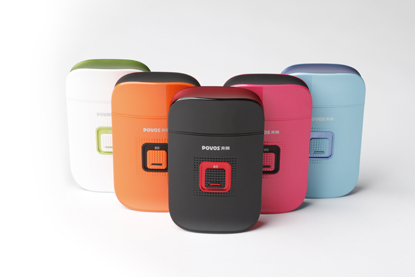
In India registration and
protection of Designs are regulated by Designs Act 2000 and Designs rules 2001.
Design is defined under Section 2 of Designs Act 2000 as only the features of
shape, configuration, pattern, ornament or composition of lines or colours
applied to any article whether in two dimensional or three dimensional or in
both forms, by any industrial process or means, whether manual mechanical or
chemical, separate or combined, which in the finished article appeal to and are
judged solely by the eye; but does not include any mode or principle of
construction or anything which is in substance a mere mechanical device, and
does not include any trade mark as defined in clause (v) of sub-section (1) of
section 2 of the Trade and Merchandise Marks Act, 1958 (43 of 1958) or property mark as defined in section
479 of the Indian Penal Code (45 of 1860) or any artistic work as defined in
clause (c) of section 2 of the Copyright Act, 1957(14 of 1957). A design is prohibited from registration on
the grounds mentioned under Section 4 of the relevant Act, i.e.,
In India registration and
protection of Designs are regulated by Designs Act 2000 and Designs rules 2001.
Design is defined under Section 2 of Designs Act 2000 as only the features of
shape, configuration, pattern, ornament or composition of lines or colours
applied to any article whether in two dimensional or three dimensional or in
both forms, by any industrial process or means, whether manual mechanical or
chemical, separate or combined, which in the finished article appeal to and are
judged solely by the eye; but does not include any mode or principle of
construction or anything which is in substance a mere mechanical device, and
does not include any trade mark as defined in clause (v) of sub-section (1) of
section 2 of the Trade and Merchandise Marks Act, 1958 (43 of 1958) or property mark as defined in section
479 of the Indian Penal Code (45 of 1860) or any artistic work as defined in
clause (c) of section 2 of the Copyright Act, 1957(14 of 1957). A design is prohibited from registration on
the grounds mentioned under Section 4 of the relevant Act, i.e.,
a) that the
design is not new
b) that it has been previously published in India or in any
other country by publication in tangible form or by use in or in any other way
prior to the filing date, or where applicable, the priority date, or where
applicable, the priority date of the application for registration; or
c) that
it has been significantly distinguishable from known designs or d) comprises or
contains scandalous or obscene matter.
Further, a design is subject to cancellation on the grounds mentioned
under Section 19 of the relevant Act, i.e., a) that the design has been
previously registered in India,
b) that it has been previously published in India
or in any other country prior to the date of registration or c) that the design
is not a new or original design or c) that the design is not registrable under
this Act; or
e) that it is not a design as defined under clause (d) of section
2.
Although in India design has not been classified further into categories
according to Designs Act 2000, but it has been observed that Indian Courts
classify the design in question into aesthetic and functional. An aesthetic
design is one which is applied to any article, whether for the pattern or the
shape or the configuration or the ornamentation thereof, or for any two or more
of those purposes, and by whatever means it is applied, having features which
appeal to and are judged solely by the eye, irrespective of the aesthetic
quality thereof. A functional design means any design applied to any article,
whether for the pattern or the shape or the configuration thereof, or for any
two or more of those purposes, and by whatever means it is applied, having
features which are necessitated by the function which the article to which the
design is applied is to perform. In India the landmark judgment which acted as
precedent for subsequent cases was passed in Bharat Glass Tube Limited v. Gopal
Glass Works Limited. In this case the the Court gave interpretation of Section
2 (d) stating “Designs has been defined in Section 2(d) which means that a
feature of shape, configuration, pattern, ornament or composition of lines or
colors applied to any article whether in two dimensional or three dimensional
or in both forms, by any industrial process. That means that a feature or a
pattern which is registered with registering authority for being produced on a
particular article by any industrial process whether manual, mechanical or chemical
or by any other means which appears in a finished article and which can be
judged solely by eye appeal. The
definition of design as defined in Section 2(d) read with application for
registration and rule 11 with form 1 makes it clear that the design which is
registered is to be applied to any finished article which may be judged solely
by eye appeal. A conjoined reading of these three provisions makes it clear
that a particular shape or a particular configuration is to be registered which
is sought to be produced on any finished article which may be judged solely by
eye appeal.
However the judgment passed in Interlego v. Tyco Industries,
the landmark British case which was pertaining to designs of toy bricks
originated in Hong Kong and eventually was filed before the Privy Council in
the United Kingdom acted as guiding principle for cases in India. In that the
Privy Council observed that the bricks qualified for registered design
protection, and thus did not qualify for copyright protection. Lord Oliver
observed as follows -

“Inevitably a designer who sets
out to make a model brick is going to end up by producing a design, in essence
brick shaped. […] There is clearly scope in the instant case for that argument
that what gives the Lego brick its individuality and the originality without
which it would fail for want of novelty as a registrable design is the presence
of features which serve only the functional purpose of enabling it to interlock
effectively with the adjoining bricks above and below”.
The court further held that
design drawings were a combination of both artistic and literary works. The
written matter on such a drawing comprised the literary matter, and the
graphics the artistic matter.
The only changes made to the
drawings were alterations to some radii and to the dimensions of some elements.
Lord Oliver further
observed-
“Take the simplest case of
artistic copyright, a painting or a photograph. It takes great skill, judgement
and labour to produce a good copy by painting or to produce an enlarged
photograph from a positive print, but no-one would reasonably contend that the
copy, painting, or enlargement was an "original" artistic work in
which the copier is entitled to claim copyright. Skill, labour or judgement
merely in the process of copying cannot confer originality.”
In India designs are protected by
two legal rights, they are as follow:
1) Registered Designs
2) Artistic Copyright
Design registration in India
gives the owner, a monopoly on his or her design, i.e. the right for a limited
period to stop others from making, using or selling the design without the
owner’s permission and is additional to any design right or copyright protection that may exist
automatically in the design.
Under Section 6
(1) a design may be
registered in respect of any or all of the articles comprised in a prescribed
class of articles.
(2)Any question arising as to the
class within which any article falls shall be determined by the Controller
whose decision in the matter shall be final.
(3)Where a design has been registered in
respect of any article comprised in a class of article, the application of the
proprietor of the design to register it in respect of some one or more other articles comprised in that
class of articles shall not be refused, nor shall the registration thereof
invalidated—
Under Section 7 the Controller
shall, as soon as may be after the registration of a design, cause publication
of the prescribed particulars of the design to be published in such manner as
may be prescribed and thereafter the design shall be open to public inspection.
Under Section 11when a design is
registered, the registered proprietor of the design shall, subject to the
provisions of this Act, have copyright in the design during ten years from the
date of registration.
To conclude with, a design is
entitled to be registered and protected from being copied and applied on the
same article and of the same class of articles which is not merely functional
but has an aesthetic appeal to eye. At the same time a design is entitled of
copyright which is absolutely original and has not been copied from any other
class of articles.
By Ranidipa Ghosh